Quantum computing companies compared
A field guide to reading qubit leaderboards without being fooled by them. Four kinds of physics, four different bets, one number you should ignore.
You'll be able to compare the four qubit technologies on speed, error rate and scale, and say why none wins on all three.
The answer in four lines
Companies build on four different technologies, and a qubit in one is not a qubit in another, so comparing qubit counts across them is meaningless. What decides the race is a product of coherence, speed, connectivity, scalability, and maturity, cashed out in one metric that resists spin: how many error-corrected qubits a machine can keep alive. For live standings, see The Race; this page teaches you how to read it.
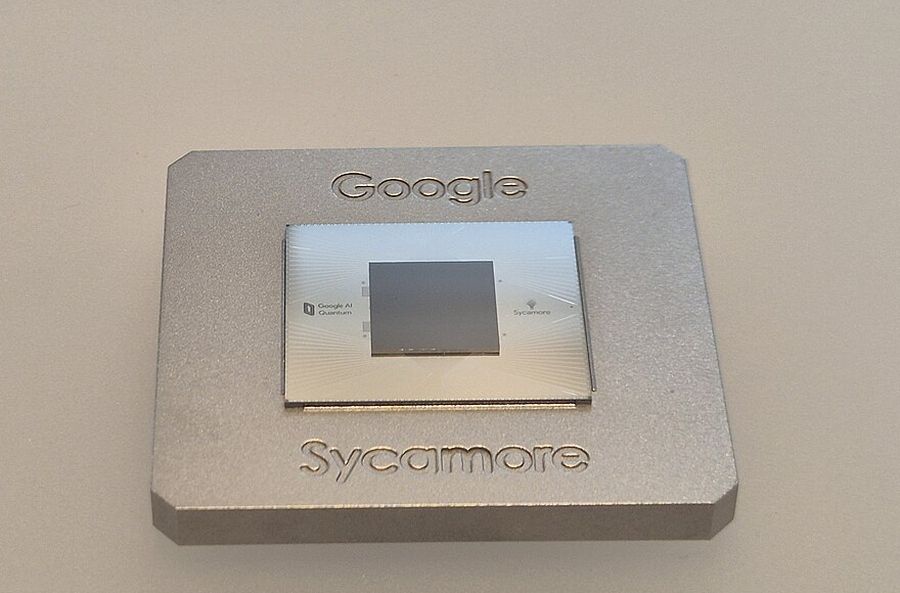
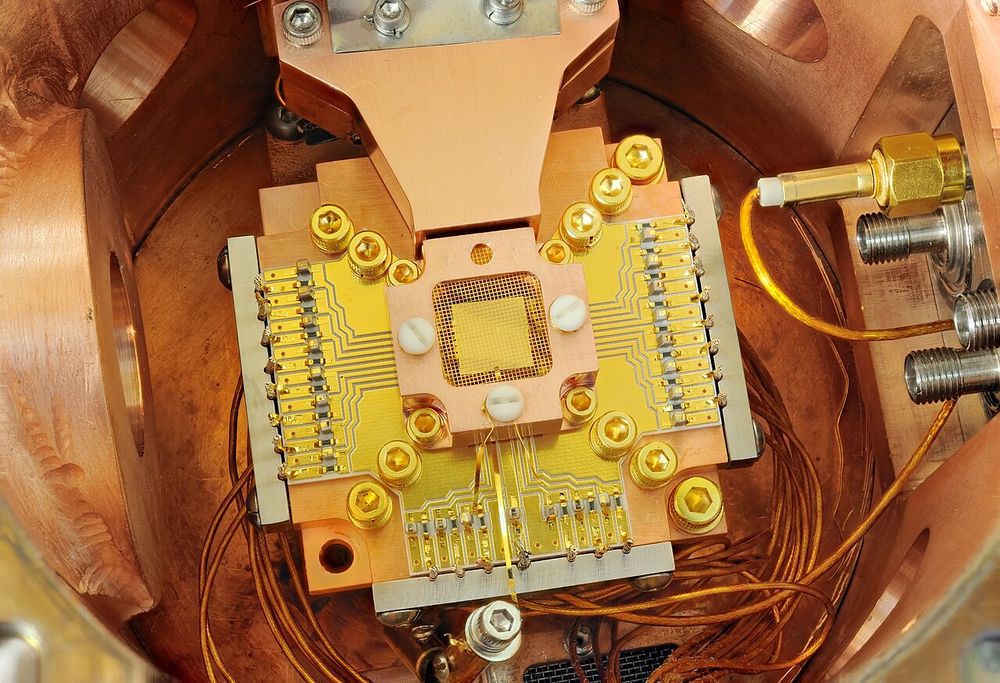

.jpg)
Why the "biggest number" is the wrong number
Every few months a company announces a record qubit count and the headlines treat it like a lap time. It isn't one. A quantum computer's qubit count tells you almost nothing on its own, the way a car's number of cylinders tells you nothing about whether it wins races.
Two reasons. First, qubits vary wildly in quality: a noisy qubit that forgets its state in a microsecond is not interchangeable with a pristine one that holds for seconds, and error correction spends the noisy ones at a brutal exchange rate. Fifty excellent qubits routinely beat a thousand sloppy ones.
Second, and this is what this page is about: different companies aren't even building the same kind of qubit. There are four main technologies racing at company scale, each running on different physics, each with a completely different personality. Counting one against another is like comparing a sprinter's top speed to a marathoner's and declaring a winner. Below, click through the four and see what each is really betting on, then two more approaches, earlier-stage but worth knowing about.
The four technologies, side by side
Click a technology. The bars are structural strengths and weaknesses: the physics tendencies of each approach, not this quarter's numbers (those live on The Race). There's real variation between companies within each camp.
Two more bets, not yet racing
The four above are the ones with real companies shipping real chips and racing head-to-head today. Two more approaches are worth knowing regardless: one because it is already producing industrially serious results, the other because it is the subject of a very public, very unresolved scientific argument you are likely to see cited as settled when it isn't.
Spin qubits: betting the semiconductor industry already built the factory
A spin qubit stores its state in the spin of a single electron or nucleus, trapped in a silicon quantum dot: a structure small enough, and similar enough to an ordinary transistor, that the bet is not "invent new hardware" but reuse the chip-fabrication industry that already exists. Intel, Diraq, Silicon Quantum Computing and Quantum Motion are the companies making it.
The bet: decades of semiconductor manufacturing scale, reused wholesale. The bottleneck: still early at multi-qubit scale, and nearest-neighbor connectivity like superconducting.
It is paying off faster than most of the other bets on this page. In January 2022, three independent groups (RIKEN/QuTech, TU Delft, and UNSW) simultaneously published silicon gate fidelities above the fault-tolerance threshold for the first time; the RIKEN/QuTech result reported 99.5% two-qubit and 99.8% single-qubit gate fidelity, with the two-qubit gate itself running in 100 nanoseconds (Noiri, Takeda, Nakajima, Kobayashi, Sammak, Scappucci et al., Nature 601, 338–342 (2022)). In 2025 the bet's actual thesis got tested directly: Steinacker, Dumoulin Stuyck, Lim, Tanttu, Feng et al. (Diraq/UNSW, fabricated at imec), "Industry-compatible silicon spin-qubit unit cells exceeding 99% fidelity," Nature 646, 81–87 (2025), ran the devices through an actual 300-millimetre semiconductor foundry, not a university cleanroom, and still measured single- and two-qubit control fidelities above 99% across all four devices tested, with state-preparation-and-measurement fidelity up to 99.9%.
What isn't proven yet: none of this is at the qubit counts the four leading approaches have reached. "Unit cells" means exactly that: a handful of qubits shown to work inside a real foundry process, not hundreds wired together. Whether classical control wiring and crosstalk stay manageable as that count climbs is the same scaling question every modality on this page eventually has to answer.
Topological qubits: a bet on the physics doing the error correction for free
Every qubit on this page needs active error correction layered on top of noisy hardware, the entire subject of this site's QEC page. A topological qubit is a bet that you can build hardware where the physics itself refuses to let local noise corrupt the stored information, before any correction circuit runs at all. The proposal, dating to Lutchyn, Sau & Das Sarma, "Majorana Fermions and a Topological Phase Transition in Semiconductor–Superconductor Heterostructures," Phys. Rev. Lett. 105, 077001 (2010): braid non-abelian anyons (specifically, Majorana zero modes appearing at the two ends of a topological superconducting nanowire) and the resulting quantum state is protected by topology, not by redundancy. If it works, it could need dramatically fewer physical qubits per logical qubit than any of the other five approaches here.
That "if" is not rhetorical, and this field has been burned by its own claims before: a 2018 paper from a Microsoft-affiliated Delft lab (Zhang, Liu, Kouwenhoven et al., "Quantized Majorana conductance," Nature 556 (2018)) reporting the tell-tale signature was retracted in March 2021 after Sergey Frolov (University of Pittsburgh) showed a mundane, non-topological effect could produce the identical data. On 19 February 2025, Microsoft announced Majorana 1, a chip it said hosted eight topological qubits, alongside a new paper (Microsoft Azure Quantum et al., "Interferometric single-shot parity measurement in InAs–Al hybrid devices," Nature 638, 651 (2025)) demonstrating a parity measurement consistent with topological behaviour. What the paper did not do, in Nature's own editorial team's words, was "represent evidence for the presence of Majorana zero modes in the reported devices." Physicists remain split, on the record: Henry Legg (University of St Andrews) argued Microsoft's own "topological gap protocol" produces inconsistent verdicts depending on which parameter range you feed it; Sergey Frolov, the same physicist from the 2018 retraction, called the released measurement data "just noise," and "simply disappointing"; Eun-Ah Kim (Cornell) questioned whether the data even showed the two distinct states the claim requires. Even a comparatively sympathetic assessment (Kartiek Agarwal) concluded the device "can't be used as a qubit in its present state." Sankar Das Sarma, co-author of the original 2010 proposal above, has stayed cautiously engaged rather than dismissive, saying the devices' disorder has improved but "needs to go down by another factor of two" before the underlying question is settled experimentally.
None of this means topological qubits are a dead end. It means the claim is unresolved, in public, right now, which is a different epistemic state from "proven" or even "strongly suggestive," and worth naming exactly because Majorana 1's press coverage did not always draw that distinction.
WorkingThe trade-off nobody escapes
Why hasn't one technology simply won? Because the requirements pull against each other. Trapped ions hold their quantum state on the order of a million times longer than superconducting qubits, yet superconducting machines run vastly more operations per second, because their gates are nanoseconds where ions' are microseconds to milliseconds. One is a better memory; the other is a faster processor. Neither wins outright, because the figure of merit is roughly
That figure of merit is a product, where any single zero sinks the whole thing. That's why "we have the most qubits" (one term, and the least informative one) is a marketing line, not a lead. Each technology is a bet that its weakest factor is the one that yields first: ions bet gate speed and trap-scaling get solved; superconductors bet coherence and connectivity improve; neutral atoms bet their large reconfigurable arrays keep scaling; photonics bets manufacturability beats photon loss.
The scoreboard worth reading. Skip qubit count. Look at: physical two-qubit error rate (are they below the error-correction threshold?), connectivity (all-to-all or nearest-neighbor?), demonstrated logical-qubit lifetime, and above all whether they've shown below-threshold error correction, the one result that turns raw qubits into logical ones. A machine's logical-qubit count is its real size.
FormalWhat to read instead of the headline
The metrics that survive scrutiny, roughly in order of how much they tell you:
| Metric | What it captures | Why it beats qubit count |
|---|---|---|
| Logical qubits + code distance | Error-corrected qubits kept alive, and how hard they are to break | The only count that maps to running algorithms; requires below-threshold operation to be non-zero at all. |
| Below-threshold Λ | Error suppression per two-step distance increase (pL ≈ (p/pth)⌊(d+1)/2⌋) | Λ > 1 proves error correction works on that hardware; Λ ≤ 1 means more qubits make it worse. |
| Two-qubit gate fidelity | Error per entangling operation vs the code threshold | Sets the physical p that fixes the entire error-correction exchange rate; a small fidelity gain shrinks the logical-qubit cost super-linearly. |
| Connectivity | All-to-all (ions) vs nearest-neighbor (superconducting) vs reconfigurable (atoms) | Poor connectivity forces SWAP overhead that inflates circuit depth and effective error. |
| Coherence × gate-speed | How many operations fit inside one qubit's usable lifetime | The real "clock budget"; a long-lived slow qubit and a short-lived fast one can tie. |
| Qubit count | How many physical qubits exist | Last, and only meaningful after all of the above: it's the denominator, not the score. |
The deep reason the field's scoreboard shifted from physical to logical counts around 2024–25 is that below-threshold error correction stopped being hypothetical (the Willow-class demonstrations). Once error correction provably works, the meaningful unit of progress becomes error-corrected qubits, so a company reporting a few high-distance logical qubits is further along than one reporting thousands of raw physical qubits with no correction story. When you read The Race, that's the number to hunt for.
Check yourself
Two companies announce chips the same week. Which single number tells you most about which is further along?
Λ, the factor by which logical errors fall when you raise the code distance by two, is the only one of these that tells you whether the machine is below threshold. Below threshold, adding qubits helps; above it, adding qubits makes things worse, and a bigger chip is a bigger liability. Qubit count comes last on this page’s Formal list for exactly that reason.
Go deeper
🏁 The live scoreboard
Where these metrics are meant to get filled in. Still empty, and the page says why.
The Race →Below threshold
The error-correction result that made logical-qubit counts the measure that matters.
Quantum error correction →Five more paradigms, briefly
Everything above assumes the goal is a general-purpose, gate-model quantum computer, the thing every company on this page is racing to build. Five more ideas sit adjacent to that race: two alternative ways to compute, the physical infrastructure a "quantum internet" would need to connect any of these machines together, and the still-unresolved question of what the field's headline experiments have proven so far.
Adiabatic & physical quantum annealing
The Volcano mission on the Solver's Path already teaches simulated annealing, the classical algorithm that cools a search the way metal is tempered. Quantum annealing is the physical hardware version of a closely related idea: encode a problem as an Ising-model energy landscape, start every qubit in an easy-to-prepare ground state, then slowly deform the system toward the hard problem's Hamiltonian, so that (in the ideal case) the system tracks its own ground state the whole way and ends up sitting on the answer. Kadowaki & Nishimori, Phys. Rev. E 58, 5355 (1998), proposed it; Farhi, Goldstone, Gutmann & Sipser, arXiv quant-ph/0001106 (2000), generalized the idea into adiabatic quantum computation as a computing model in its own right. Whether that general model is as powerful as the gate model was a separate, harder question, proved four years later (Aharonov et al., 2004/2007) and covered in full, including the exact construction, on The Machinery. A physical annealer like the one below runs the same idea far faster and hotter than that provably-safe regime, which is a deliberate engineering trade-off, not a claim of the same guarantee. D-Wave built the first commercial version: Johnson, Amin, Gildert et al., Nature 473, 194–198 (2011), demonstrated an 8-qubit programmable annealer, and the company has since scaled to thousands of qubits. The limit, stated plainly: a physical annealer is not a universal quantum computer. It solves exactly one problem shape (find the ground state of an Ising model) and cannot run Shor's algorithm, Grover's, or anything on this site's own Machinery page. Whether it beats the best classical solvers on real problems has been argued for over a decade, with the gap narrowing on both sides every time someone checks carefully, which is why QAOA, the gate-model cousin of the same idea, exists as a separate, independently-judged bet.
◆ The classical machines built to beat exactly this. Coupled oscillators, coupled lasers and fluctuating bits all minimise the same Ising-model energy landscape a quantum annealer does, by an entirely classical route. Can a classical machine out-optimise a quantum one? ▸Measurement-based (one-way) quantum computing
Every algorithm on this site's Machinery page is built from gates applied in sequence. Measurement-based quantum computing throws that model out entirely: prepare a large, fixed cluster state (a specific, highly entangled resource that takes no knowledge of the eventual computation to build) and then compute by measuring qubits one at a time, choosing each measurement's basis adaptively from earlier outcomes. No gate is ever applied after the cluster state is made; the computation is the sequence of measurements. Raussendorf & Briegel, Phys. Rev. Lett. 86, 5188–5191 (2001), proved this is exactly as powerful as the circuit model. It matters commercially because it is close kin to fusion-based quantum computing, the architecture PsiQuantum's photonic bet (named above) is built around: photons are poor at direct two-qubit gates, so a photonic machine has strong structural reasons to prefer measuring its way to an answer over gating its way there.
Continuous-variable quantum computing
Every qubit on this page is discrete: two basis states, on or off. A continuous-variable (CV) quantum computer instead encodes information in a continuous quantity, most often the amplitude and phase (the two quadratures) of a mode of light: a qumode rather than a qubit. Lloyd & Braunstein, Phys. Rev. Lett. 82, 1784–1787 (1999), laid out the conditions for a universal CV quantum computer. It is photonic's other on-ramp alongside the discrete-photon route described above, and it is where the two headline "quantum advantage" photonic results sit: Zhong et al. (Jian-Wei Pan's group), "Quantum computational advantage using photons," Science 370, 1460–1463 (2020), the Jiuzhang device (Gaussian boson sampling on squeezed light), and Xanadu's Borealis, Madsen et al., Nature 606, 75–81 (2022), the first such device offered over the public cloud. Both are sampling machines, not general-purpose computers: they solve one specific, hard-to-simulate-classically counting problem and nothing else, which is the same caveat every "quantum advantage" claim on this page needs; see below.
Quantum networking & repeaters
Entangling two qubits in the same fridge is one problem; keeping them entangled across a continent is a different one, because a photon carrying quantum information cannot simply be amplified along the way the way a classical signal can: the no-cloning theorem forbids copying the unknown state to boost it, and loss grows exponentially with fibre distance. Briegel, Dür, Cirac & Zoller, Phys. Rev. Lett. 81, 5932 (1998), proposed the fix: a chain of intermediate stations that generate and purify entanglement over short hops, then extend it stage by stage rather than trying to send one photon the whole way. This is the quantum repeater. Wehner, Elkouss & Hanson, Science 362, eaam9288 (2018), lay out what a real network built on this would need, stage by stage, and where the field stands on that roadmap. A real early node-to-node network has already been built on the ground: Pompili et al. (Delft), Science 372, 259–264 (2021), entangled three physically separated nitrogen-vacancy-centre nodes with real-time feed-forward between them. This site's own QKD section covers the satellite alternative to all of this: Micius sidesteps repeaters entirely by putting the entangled source in orbit, at the cost of the 0.12-bit-per-second rate already discussed there.
NISQ & quantum advantage experiments
Preskill, Quantum 2, 79 (2018), named the era we are in: NISQ, Noisy Intermediate-Scale Quantum: machines too small and too error-prone for fault tolerance, but potentially large enough to do something a classical computer cannot. In October 2019, Google claimed the first demonstration: Arute et al., Nature 574, 505–510 (2019), reported a task their Sycamore chip completed in 200 seconds that a top supercomputer would need roughly ten thousand years to match. Since then the claim has been fought over by both sides, in public, and it has moved more than once. IBM immediately countered that a smarter classical technique could do it in about 2.5 days, not ten millennia. Over the following two years classical simulations kept improving further, at one point matching Sycamore's own sample quality in under a day on a GPU cluster. Google's own follow-up work then moved the target again: Morvan, Villalonga, Mi et al., "Phase transitions in random circuit sampling," Nature 634, 328–333 (2024), showed that running at lower noise let the same style of chip pull back ahead of the classical simulations available at the time. And the most recent move belongs to the classical side again: Zhao, Zhong, Pan, Chen, Fu, Su, Xie, Zhao, Zhang, Ouyang, Lu, Pan & Chen, National Science Review 12, nwae317 (2025), reproduced Sycamore's original 2019 benchmark roughly 7× faster using 1,432 GPUs, stating plainly that this "provides the first unambiguous experimental evidence to refute Sycamore's claim of quantum advantage" on that specific task. Nobody has the last word here, which is exactly why this page's own answer, above, never uses raw sampling-advantage headlines as evidence for anything on The Race.